
For many Greensboro residents, receiving a citizenship interview notice brings both excitement and anxiety. You may have waited months for this step, and the appointment at the USCIS field office can feel like it will determine your future. Feeling proud, nervous, and uncertain at the same time is completely normal, especially if this is your first immigration interview in the United States.
Some applicants assume the interview will simply be a short civics quiz or a quick formality. Then they review the detailed N-400 questions, think about past travel or minor legal issues, and begin to wonder what the officer will actually ask. The truth is that the citizenship interview is manageable when you understand how it works and prepare in a focused way.
As a Latina-led immigration law firm based in Greensboro, Burgos Law has guided local residents through naturalization interviews since 2018. Many of us are immigrants or come from immigrant families, so we know from experience how personal this moment is. In this guide, we explain how citizenship interviews typically work in Greensboro, what often surprises applicants, and how preparation with a Greensboro citizenship lawyer can help you approach the interview with confidence.
What a Greensboro Citizenship Interview Really Involves
A citizenship interview is more than answering a few civics questions. It is a formal appointment at the USCIS field office where an officer confirms that you meet every requirement for naturalization. During the meeting, the officer reviews your N-400 application, evaluates your English and civics knowledge, and ensures your answers are accurate and consistent with your history.
The N-400 becomes the roadmap for the conversation. You are placed under oath, and the officer goes through your personal details, immigration history, family background, work history, and travel outside the United States. The officer will also ask the “yes or no” eligibility questions near the end of the form.
At different points, the officer will administer the civics questions and the reading and writing portions of the English test. Many interviews last about 20 to 30 minutes, although complex cases can take longer. Understanding that the interview is a full review of your eligibility—not just a quiz—can help you prepare for a detailed discussion about your life.
Because Burgos Law focuses exclusively on immigration law, we stay current on changes to naturalization procedures and interview practices. Our preparation is based on what applicants typically experience at the Greensboro field office, not just general guidelines.
Step-By-Step Timeline for a Greensboro Citizenship Interview Day
Visualizing the interview day can significantly reduce anxiety. Most applicants begin by planning their trip to the USCIS field office. We generally recommend arriving about 30 minutes early to allow time for parking, security screening, and check-in.
At the entrance, you will pass through security similar to an airport checkpoint. You must present your interview notice and follow instructions from security officers. Afterward, you will check in at the reception window with your notice and photo identification, such as your green card or state ID.
Waiting times vary depending on how busy the office is. Some applicants are called quickly, while others wait longer. When the officer calls your name, they will escort you to their office and ask you to raise your right hand and swear to tell the truth. Only then does the interview officially begin.
The officer often starts by confirming basic details such as your full legal name, address, and date of birth. From there, the officer follows the N-400 and asks questions about your immigration history, travel, work, family, and eligibility. The reading, writing, and civics tests are typically administered during this conversation.
Clients frequently tell us that understanding each stage of the day helps them feel calmer when walking into the Greensboro field office. We also help clients prepare practical details such as organizing documents, planning transportation, and managing interview-day nerves.
How Officers Use Your N-400 During the Interview
Your N-400 application is the central document in your case. Officers review it closely and often move through it page by page during the interview. They may ask you to confirm your personal details, explain name changes, or spell names.
Travel outside the United States is a common focus. Officers review each trip you listed, the length of time you were outside the country, and whether those trips affect your continuous residence or physical presence requirements. Long or frequent trips may lead to additional questions about where you stayed and whether you maintained ties to the United States.
Employment and education history may also come up. Officers sometimes ask about gaps in employment or frequent job changes. Family relationships, marriages, and divorces may also be reviewed, especially if your permanent residence was obtained through marriage. Any pending family petitions are also areas officers tend to explore.
The final section of the N-400 includes many yes-or-no questions about criminal history, immigration violations, taxes, and other issues related to good moral character. If you answered “yes” to any question, the officer will ask for more details. Even if you answered “no,” you may still be asked whether you have ever had police contact, received tickets, or gone to court.
Because the N-400 is so important, we review it carefully with our clients before their interview. We often conduct practice sessions that mirror how officers typically ask questions, helping clients clarify dates, addresses, and other details in advance.
English & Civics Testing at the Greensboro Interview
Many applicants focus most on the English and civics tests. However, the officer evaluates your English-speaking ability throughout the entire interview. Your responses during the conversation about your N-400 demonstrate whether you can understand and communicate in English.
The reading and writing tests are brief. For the reading portion, the officer shows you a simple sentence and asks you to read it aloud. For the writing test, the officer dictates a sentence and asks you to write it. Both sentences use vocabulary from official USCIS study materials.
The civics test is conducted orally. The officer selects questions from the official USCIS list of possible questions. You may be asked up to ten questions, but the officer stops once you answer six correctly.
Some applicants qualify for exceptions or modifications based on age, years as a permanent resident, or certain medical conditions. In those situations, the civics test may be given in the applicant’s native language or simplified. These cases often require additional forms and documentation.
Our bilingual team at Burgos Law helps clients prepare in both English and Spanish. We review civics questions together, practice speaking answers clearly, and conduct mock interviews so the real interview feels more familiar.
Common Issues That Complicate Greensboro Citizenship Interviews
Not every naturalization case is straightforward. Some applicants have circumstances that require extra preparation. One common issue involves contact with law enforcement. Even if charges were dismissed or occurred many years ago, officers usually want to review certified court records. Arriving without these documents may lead to delays while USCIS requests additional information.
Taxes and financial obligations are another area officers often examine. If you have unpaid taxes or have not filed returns, the officer may ask for tax transcripts or evidence of payment plans.
Travel outside the United States can also raise questions, particularly if trips lasted longer than six months or occurred frequently. Officers may ask about the purpose of the trips and whether you maintained a home, job, or family ties in the United States.
Life changes after filing the N-400 can also matter. Marriage, divorce, a new child, a job change, or a new address should be mentioned during the interview. Updating these details helps keep your application accurate.
At Burgos Law, we will review potential issues with clients before their interviews so we can gather documents and prepare explanations in advance.
How to Prepare for Your Greensboro Citizenship Interview
Preparation often makes the biggest difference in how confident applicants feel. We usually focus on three main areas: documents, practice, and personal readiness.
First, gather essential documents. These usually include your green card, government identification, passports, interview notice, and recent tax returns. Marriage or divorce records, children’s birth certificates, Selective Service proof, and certified court records may also be required depending on your history.
Organize these documents in a clear folder or binder. Group them by category so you can quickly locate items if the officer asks for them.
Second, practice your answers. Review your N-400 aloud, paying attention to dates, addresses, and important events. Practicing out loud helps many people feel more comfortable speaking during the interview.
Finally, prepare yourself for the day of the appointment. Plan your transportation, arrive early, and wear comfortable, professional clothing. If you do not understand a question during the interview, it is acceptable to politely ask the officer to repeat it.
We often help clients prepare through virtual meetings, document reviews, and mock interviews so they can feel ready without disrupting their work or family responsibilities.
What Happens After Your Citizenship Interview in Greensboro
After the interview, USCIS generally provides one of three outcomes:
- The first possibility is approval. In this case, the officer recommends approval, and you later receive a notice scheduling your oath ceremony.
- The second outcome is a continued case. This means the officer needs additional information before making a decision. You may be asked to submit documents, retake part of the test, or attend another interview.
- The third outcome is a denial. USCIS will send a written explanation describing the reasons. Depending on the situation, you may have the option to request a hearing or reapply.
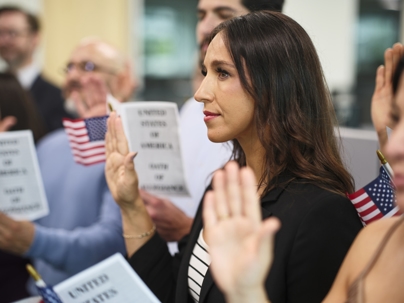
If your application is approved, the final step is the oath ceremony. During this ceremony, you take the Oath of Allegiance and officially become a United States citizen. The ceremony may occur on a later date, depending on scheduling at the Greensboro office.
Our firm continues assisting clients after the interview, whether that involves responding to USCIS requests, reviewing decisions, or preparing for the oath ceremony.
When to Talk With a Greensboro Citizenship Lawyer About Your Interview
Some applicants feel comfortable preparing on their own, especially if their immigration history is straightforward. However, many people benefit from consulting a Greensboro citizenship lawyer before their interview.
You may want legal guidance if you have past arrests, extended travel outside the United States, complicated family history, or unresolved tax issues. These situations do not necessarily prevent citizenship, but they can affect how USCIS reviews your case.
At Burgos Law, we examine your application the same way an officer would. We review your N-400, supporting documents, travel history, and potential concerns. Then we conduct realistic mock interviews to help you prepare clear and accurate answers.
Because our firm is Latina-led and focused entirely on immigration law, we understand both the legal requirements and the personal challenges many immigrants face during this process. Our goal is to help you feel informed and supported before walking into the interview.
Talk With a Greensboro Citizenship Lawyer About Your Interview
The citizenship interview is one of the most meaningful conversations you may ever have with the United States government. When you understand how the Greensboro interview works, what officers focus on, and how to prepare your documents and your answers, the process becomes clearer and far less overwhelming. Careful preparation lets you focus on sharing your story honestly instead of worrying about surprises.
If you have an upcoming interview notice, are thinking about filing your N-400, or know that your history includes trips, arrests, or other complications, we invite you to talk with us. At Burgos Law, we take time to explain every step in plain language, review your specific situation, and prepare you through practical guidance and mock interviews tailored to the Greensboro field office. You do not have to walk into this interview alone.
Call (336) 739-5166 to schedule a time to talk about your Greensboro citizenship interview.